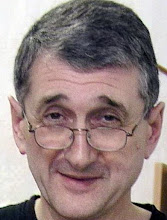
Last week, a Russian daily Izvestia published an article which announced the completion of the tender whose topic was “Building of a national 3D solid modeling kernel”. The winner is a well-known MOSCOW STATE TECHNOLOGICAL UNIVERSITY "STANKIN", one of the leading technical universities in Russia and likely in Europe. (STANKIN is an abbreviation for machine-tool institute). The main comment for Izvestia was given by Sergey Kuraksin, presented by the daily as the CEO of the engineering center of STANKIN. The CAD market perfectly knows Sergey mainly as the CEO of Top Systems, one of the leading Russian CAD/PLM companies whose offerings include 3D CAD TFlex and a developed PLM set of products.
Another participant of the tender was TsAGI, The Central Aerohydrodynamic Institute named after N.Zhukovsky. TsAGI is world known by fundamental contributions into the Soviet and Russian aviation and space industry.
Of course the tender was open; all its minor details (see a link below) seem to confirm that although TsAGI is obviously a unique engineering institution, its skills and experience in software engineering look substantially less than those of STANKIN (especially together with Top Systems).
The investment into the project is 690M RUR (today ~22M USD) for 3 years. Parasolid is indicated “as a functional prototype” for the project.
Izvestia gives a brief characteristics of what the modeling kernel is, mentions the component's key importance for industry, and says that today the world and Russian industry use such imported products as Parasolid and other – produced more than 20 years ago. (Note that ASCON, a leading Russian CAD/PLM provider, has its in-house modeling kernel which is so far used only for the company's products such as well-known KOMPAS 3D).
The article also quotes some external expert opinions that are generally skeptical. One of them says that building a software is not a key point and reminds that Siemens has a very large team to maintain Parasolid. The same expert is surprised how TsAGI which has a great “experience in plane design could fail in tender with STANKIN”. Another person, a manager from SolidWorks Russia, explains that end-users do not care what modeling kernels are used in applications and added that “his company is not going to replace Parasolid with something else”.
Links: