3/28/2011

Does SolidWorks Have Competitors in the Russian Market?

SolidWorks is rather successful in Russia, the fact which was confirmed at SWW 2011 and also at the previous such events. This, as well as probably new relations between DS and SW, for the first time in history resulted in establishing a position of the head of DSSW representative in Russia. Pavel Bruk (39) who was appointed to this position is a kind of unique guy: his CV includes education in airspace design, Computervision, Innovation and Design Center in Liverpool University, Unigraphics (incl. PDM, working in Germany,…), Intel, Autodesk, Bentley Systems, and at last (since Jan 2011) – DS.

In a recently published big interview for a Russian language magazine CAD/CAM/CAE Observer, Pavel made a series of sharp statements that many people will definitely not agree. Here are some fragments from the interview.

What are some explicit functional advantages of SolidWorks in comparison with KOMPAS-3D?
This is exactly the case when it’s reasonable to consider functional differences. At present KOMPAS-3D is lagging behind at least, by 5 years. The existing KOMPAS 3D functionality, accepted methods of work, the geometric kernel- all this is non-competitive in comparison with systems of the SolidWorks class...

In a recent interview to our magazine, Eugene Lesnikov from Autodesk CIS said that it was not reasonable to compare Inventor with SolidWorks and SolidEdge, since Inventor has no "big brother" who would inhibit its growth. What do you think - as specialist who worked earlier for SPLM and Autodesk? Perhaps Inventor should then be compared in functionality with CATIA and NX?
I am somewhat surprised to hear such words from a man who definitely knows what is PLM (E.Lesnikov was earlier working in IBM with DS: DL)...Rather, Inventor has a problem with his "little brother"- AutoCAD. We have repeatedly witnessed how in the case of financial problems at Autodesk, all the powers and resources were trasferred to support platform business. Therefore, investments into Inventor are from time to time in danger ...Besides, Autodesk became involved in things uncharacteristic for engineers. Adding Alias and CAE (Moldflow, Algor, Blue) is an unsuccessful attempt to capture a part of the market with a help of Inventor…

It would be interesting to know your opinion about a couple SE-NX?
As you know, Siemens does not publish any data on such sales. In my estimation, Solid Edge is very much lost ground, especially in Russia. Perhaps, Siemens will try to catch up. It will be interesting to watch this attempt: perhaps Solid Edge can bite off a part of the Inventor market...

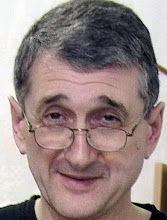
At the picture above: Pavel Bruk at COFES-Russia / isicad-2011.


3/23/2011

Will Inventor Fusion within AutoCAD 2012 really improve popularity of direct modeling?

@dmitryushakov has just published a summary of the yesterday's twitter discussion on direct modeling with @bcourter, @DeelipMenezes, and @SeanDotson. Dmitry himself also took part in that twittering.

You can read Dmitry's article in Russian or translated by Google.

My own comment. Yes, all those interested in spreading DM (not least - LEDAS), in one degree or another, can be grateful to Autodesk. However I think that it's prematurely to count how many millions of AutoCAD users will be infected by DM: rather probably the majority will not only stay noninvolved but for quite a long time will still not go beyond 2D. In addition, a specific approach of very popular Autodesk (a concrete Fusion, combination of DM with a "historical" method) may distort a trajectory towards complete victory of a true pure DM - with automatic detection of the design intent - an approach which, for example, LEDAS is developing. But these observations do not abolish or downgrade significance of the move just made by Autodesk, be it only marketing or not.

3/22/2011

Team of CAPP VERTICAL Left ASCON to Implement HORIZONTAL

Not surprisingly ASCON as the leading Russian CAD vendor very often becomes a newsmaker of the CIS market. The previous news was about the company’s 2010 results and future plans. In March, the Russian market received from ASCON a small (?) sensation: a team of the company’s CAPP solution known as VERTICAL left ASCON and founded a new company called SDI Solution.

VERTICAL is a substantial element of the ASCON’ s PLM offering, however it brought not more than 5% of the company’s 2010 income. All the rights for VERTICAL as well as its maintenance and distribution facilities stay at ASCON.

The founders of SDI Solution headed by Andrey Andrichenko, Ph.D., are going to intensively build a new CAPP system. They declared that its principles are reflected by the new company name: SDI means semantic data integration. Andrey says that all CADs are basically expert systems therefore a new trend is to change object approach by a semantic paradigm: this mainstream opens new capabilities for knowledge representation and for improvement of decision making in the CAD domain.

SDI Solution mentioned that their new system will perhaps be called HORIZONTAL.

Yesterday isicad.ru published a big interview with the founders of the new company «SDI Solution: A new Generation of CAPP» and a comment of Vladimir Zakharov, ASCON Director for Software Development, called (if I am not mistaken with an English version of the proverb) "Every cloud has a silver lining".

As I can conclude from all available information, the divorce was implemented peacefully. Probably the reason for this divorce is almost natural contradiction between comparatively-short-term industrial approach of ASCON and the will of the VERTICAL developers to promptly implement their radically new ideas.

I do not predict any problems that ASCON can meet in the near future with maintenance and local developments of VERTICAL. But of course the company should think and decide about the next generation(s) of the system.

As for SDI Solution, I am certain that they have good constructive ideas and very probably can rapidly implement a prototype. The problem will then be in industrialization, integration into (which?) PLM environment, distribution, and other... Therefore, not surprisingly, SDI Solution announced that they have already negotiated (or will have such contacts) on a partnership with Autodesk, DS, PTC, and Siemens PLM. And also with ASCON.

Btw, yesterday I re-animated my belingual twitter.


3/04/2011

ASCON, the Largest Russian CAD/PLM Company: Results of 2010 and Plans for 2011


ASCON is keeping not less than 25% of the Russian CAD market – approximately as Autodesk and considerably more than other world leading CAD companies. At a press-conference in Moscow on 2rd March, ASCON top executives announced figures characterizing company performance in 2010 and plans for 2011.

In 2010 the company attracted at least 600 new customers, while the overall number of the companies using ASCON solutions exceeded 6000. Sales reached 662,9M Rubles (approx. $23,4M compared to $18M in 2009). ASCON is committed to the principle of open information policy and is the only player in its segment of the Russian IT-market that discloses financial results. Maxim Bogdanov, ASCON CEO: “We have achieved 20+% growth of the income although recovery of the Russian economy is on the whole quite modest. This is a result of our effective planning and determination on our business development which was based on our precise taking into account the conditions of Russian business environment and hypothesis of the Russian industry state-of-art".

More than 70% of the ASCON income relates to selling of its original CAD/PLM software. In 2010, ASCON increased a number of sold licenses for all its products:
- KOMPAS-3D (mid-range parametric mechanical CAD): by 38%,
- VERTICAL (CAPP): by 26%,
- LOTSMAN (PDM/PLM): by 59%.

With regard to industry markets, 70% of sold software products were design and manufacturing solutions for machine- and instrument- building, 30% - design solutions for industrial and civil construction.

In 2010 ASCON focused its efforts on the industries of defense, nuclear, oil and gas, oil and chemistry, and metallurgy. It's worth mentioning that 38% of the ASCON customers are from state and defense organizations. A list of new customers looks rather impressive.

Among key events of 2010, ASCON emphasizes transition of KOMPAS-3D into a class of hybrid modeling systems and launching a commercial access to KOMPAS-3D in SaaS mode.

2011: Plans and Events

In 2011 ASCON is planning to make a serious jump to reach 800M RUR (about $28M) of income.

A release of KOMPAS-3D V13 for Russia is planned in May, and in October - for the global market.

ASCON wants to expand its competence in engineering industry from traditional design to manufacturing. To implement this, the company plans to release in autumn its system GOLFSTREAM for planning and management in manufacturing.

At the above mentioned press conference ASCON organized a show to compare past and future technologies (see here a video of this episode):


ASCON web sites: in Russian and in English.

Official press-release (in Russian)

2/11/2011

Inforbix to Integrate Tech Skills of DS and Sales Experience of Autodesk

Inforbix has just announced that Vic Sanchez joined the company management team as COO. From April 2000 to Oct 2004 Vic was the Managing Director and VP Sales of Autodesk EMEA. This probably means that Inforbix is approaching the stage of unveiling and active distribution its products and solutions.

An US based company, Inforbix was quite recently established by Oleg Shilovitsky (CEO) together with Anatoly Savin (CIO). To characterize what is Inforbix, I use an extended version of the title of my post presenting the new company "Oleg Shilovitsky unveils his Inforbix to technologically arrange and maintain efficiently operable mixtures of chaotic product data"(this formulae is my own interpretation of what Inforbix is doing!).

As the Inforbix web site says, Oleg has spent his last 11 years working for Smart Solutions, SmarTeam, Enovia, Dassault Systems. Over these years, Oleg held various positions in R&D group and company management. Most recently he was ENOVIA SmarTeam Chief Technology Officer. Earlier, Oleg has been involved in distribution and development of Autodesk-based software in Israel.

Oleg is also well-known as a popular blogger and PLM guru, see his blog Beyond PLM.

For several recent years, Oleg has been an active participant of the COFES conferences in Arizona, in Moscow, and in Tel-Aviv. As you can see from the picture above (presenting a section of the COFES 2011 sponsors), Oleg's personal activeness will at COFES 2011 be drastically combined with the involvement of his company.


2/09/2011

Russian Social Networking: In and Beyond the CAD/PLM Market

Russia is often considered as actively growing in all Internet-related directions but still lagging behind in social networking - especially at the enterprise level. For example at COFES-Russia / isicad-2010 some foreign experts talked about this lagging behind as obvious while the Russian attendees supported this discussion by their explanations why total networking is premature for the Russian market.

Recently I ran across a report of DigitalLife, whose study presented a global data on social networking and characterized Russia as one of the leaders:
... the study showed that online consumers are, on average, spending more time on social networking sites such as Facebook and LinkedIn than on email, despite the former only becoming mainstream in many markets over the last few years. In rapid growth markets such as Latin America, the Middle East and China, the average time spent, per week, on social networking is 5.2 hours compared to only 4 hours on email. Online consumers in mature markets remain more reliant on email, spending 5.1 hours checking their inboxes compared to just 3.8 hours on social networking. The heaviest users of social networking are in Malaysia (9 hours per week), Russia (8.1 hours per week) and Turkey (7.7 hours per week).

Usually I am quite skeptical about statistics in general and in particular about statistics gathered by global organizations in the huge Russian territory. However I trust my own impressions and they correspond to the DL conclusions.
I leave aside considerations about what percent of garbage information is circulating in the Russian Internet, instead I formulate for myself these two questions:
(1) What are the reasons of very high activity in the Russian social networks?
(2) Why social networking is sluggishly used at the Russian enterprise level?

As for the answer to (1), I believe that, ceteris paribus, high networking activity in Russia reflects shortage of other forms of social activity, including political.

There is a popular quote (almost saying) "A poet in Russia is more than just a poet" from a poem (1965) of Evgeny Evtushenko who meant that, when political activity is restricted, a poet can willy-nilly become a public figure with a political flavor. Note that in Russia this likely can be applied to practically all historic periods. Amusingly, in one of his inauguration speeches Putin used this saying as "The President in Russia is more than just a President" :) . Finally, a blogger in Russia is more than just a blogger :).

As for (2), a typical Russian individual (independently of what he or she is pretending to look like) is reflexively skeptical about any official orderliness or even rejects it. With this opinion in mind, I can consider one more question:
(3) Why CAD/PLM user forums independent of vendors are so popular in Russia?

Here are some possible reasons:
- Even the best vendor forums/blogs have some flavor of orderliness,
- There are still a lot of illegal users and they would feel uncomfortable at vendors web sites,
- Independent forums enable any critics making comments regarding any products and their comparison while vendors can hardly permit such discussions...

All main vendors have their Russian blogs, forums, twitters... and are doing their best to intensify communication with their customer communities. Note rather detailed Russian forums of ASCON and Autodesk-CIS, nice blogs of DS Russia and Autodesk-CIS, etc. However all similar networking vendor's facilities cannot compete with such independent forums like www.fsapr2000.ru or www.dwg.ru, which has 30 000 active daily visitors and 4 000 000 monthly views. Roughly speaking, we can distinguish between (a) people's forums that are independent and horizontal, (b) vendor's forums that sometimes can with great talent imitate informality, and (c) imaginary enterprise networking which seems to have some regulatory, formal, orderliness, and vertical features, and for which imitation of informality would be unnatural and hardly acceptable.

These differences, due to the above mentioned cultural reasons, are very pronounced in Russia and remain an obstacle for usage of the up-to-date enterprise networking infrastructures and tools (if enterprise networking is something efficient and demanded). Does this problem exist in the West? Hopefully mature experts of social networking can give me an answer or/and perhaps dispel my possible misunderstanding.

The picture above is taken from digitalstrategyconsulting.

2/04/2011

The First Ever Full History and Overview of Solid Modeling Kernels

By a coincidence Dmitry Ushakov published his overview (in Russian) just when a week ago he became the LEDAS CEO. On the other hand, it's already for many years that Dmitry explains such and other geometry stuff in his university lectures reflected in his book "Introduction to Mathematical Background of CAD".

Well, maybe the overview is not the first ever or it is not formally full but it is definitely extensive and written in a very clear language - even with some artistic flavor. For example to illustrate the value of ACIS, Dmitry includes a picture "Acis and Galatea" by Johann Heinrich Tischbein der Ältere (1722 - 1789) while CATIA Geometric Modeler (CGM) is associated with the French Guard Horse Artillery of the beginning of 19th century.

The paper gives a professional explanation of what a solid modeling kernel is, thoroughly describes the history of subsequent appearance of all main kernels, and then gives some comments on their comparison and the wars between them. The table is finally given to integrate some key data.

Dmitry's paper was in particular inspired by concerns and hot discussions about the future of SolidWorks - with respect to its transition from Parasolid to CGM. Such discussions - at least in the Russian market - are not always based on clear knowledge of the domain. That's why the paper is very intensively visited and discussed at the isicad web portal. As for the change of SW kernel, Dmitry knows the subject and he is optimistic.

The paper in question is in Russian but the Google translation might be sufficient at least to catch the key points. In the long run, you may look at the table-of-all-kernels and at the pictures. However, a non-automatic translation into English in not excluded in the future.

PS. Note that the Russian word yadro used in Dmitry's paper is homonymous in the Russian language and along with kernel means also nucleous, canon ball, core, and more. In his paper, Dmitry somewhat plays with this ambiguity...